Financial Independence
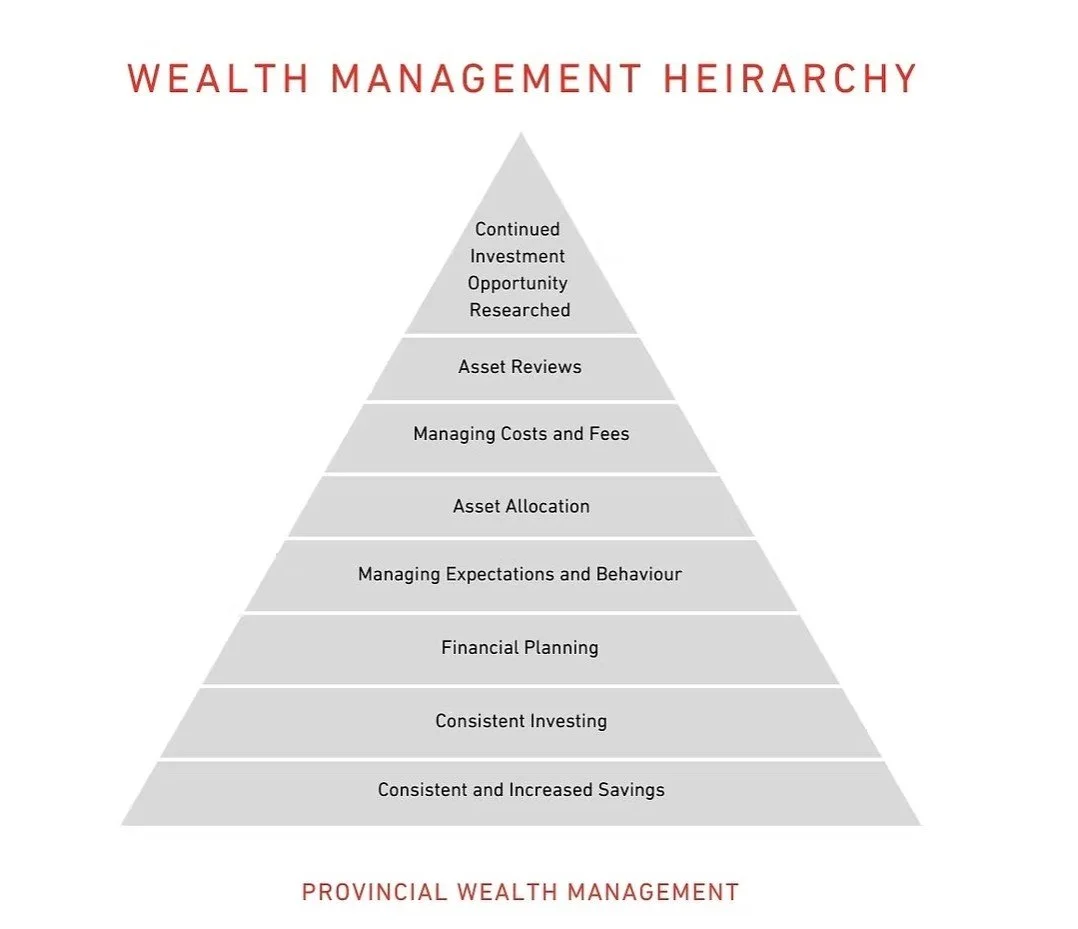
The concept of a wealth hierarchy refers to the distribution of wealth across all areas of your life, whereby you allocate time and money according to your short, medium and long-term goals and objectives.
Basic Needs: This foundational level focuses on ensuring you can meet essential expenses such as food, housing, and daily living costs. It's crucial to have a stable cash flow to cover these basics and you live within your income (no consumer debt without considerations fully explored).
Financial Safety: At this level, the focus is on protection against unforeseen events. This includes having an emergency fund (usually covering three to six months of living expenses) and adequate insurance (health, life, property, etc.) to safeguard against unexpected financial shocks
Debt Management and Wealth Accumulation: Once basic needs and safety nets are in place, the next step is managing and reducing debt alongside accumulating wealth. This involves paying down high-interest debts and beginning to invest in assets like stocks, bonds, commodities and real estate to build long-term wealth
Asset Allocation: After completing a thorough risk tolerance assessment, a ‘risk profile ‘is created which will determine your asset allocation/portfolio construction framework. Adequate diversification will be implemented so to manage investment risk.
Managing Costs and Fees: Due diligence will see your portfolio and adviser fees minimised so to add enhanced growth in your asset accumulation and deaccumulation program.
Asset reviews: Annual reviews is a minimum frequency, but often quarterly reviews are recommended.
Investment Opportunities: As the financial markets and geopolitical event occurs opportunities are identified and introduced to you when appropriate due diligence has been completed by us.
Financial Freedom: This stage is about achieving financial goals that provide more freedom and flexibility, such as saving for retirement, funding children's education, or planning for major life events like buying a home or taking vacations
Legacy Planning: The top of the pyramid involves planning for the future beyond your lifetime. This includes estate planning, creating wills, and setting up trusts to ensure your assets are distributed according to your wishes. It also involves tax planning and business succession planning if applicable
By following this hierarchy, you can create a comprehensive financial plan that addresses immediate needs while also preparing for medium, long-term goals and unexpected events.